Soba Noodles – Easy, Healthy & Delicious Japanese Buckwheat Noodles
Soba noodles are a versatile and nutritious staple in Japanese cuisine that has gained global popularity for their delicate texture and earthy flavor. Made primarily from buckwheat flour, soba noodles offer a unique nutty taste that pairs beautifully with a variety of broths, sauces, and vegetables. Their lightness and quick cooking time make them an ideal base for both warm and cold dishes, whether you’re enjoying a comforting soup on a chilly evening or a refreshing salad during summer.
Beyond flavor, soba noodles are also praised for their health benefits. Buckwheat is naturally gluten-free (when 100% buckwheat is used), high in protein, and rich in fiber and essential minerals. Incorporating soba noodles into your meals is a simple way to enjoy a balanced dish that satisfies both taste and nutrition. From traditional Japanese recipes to modern fusion bowls, soba noodles are adaptable, easy to prepare, and endlessly delicious.
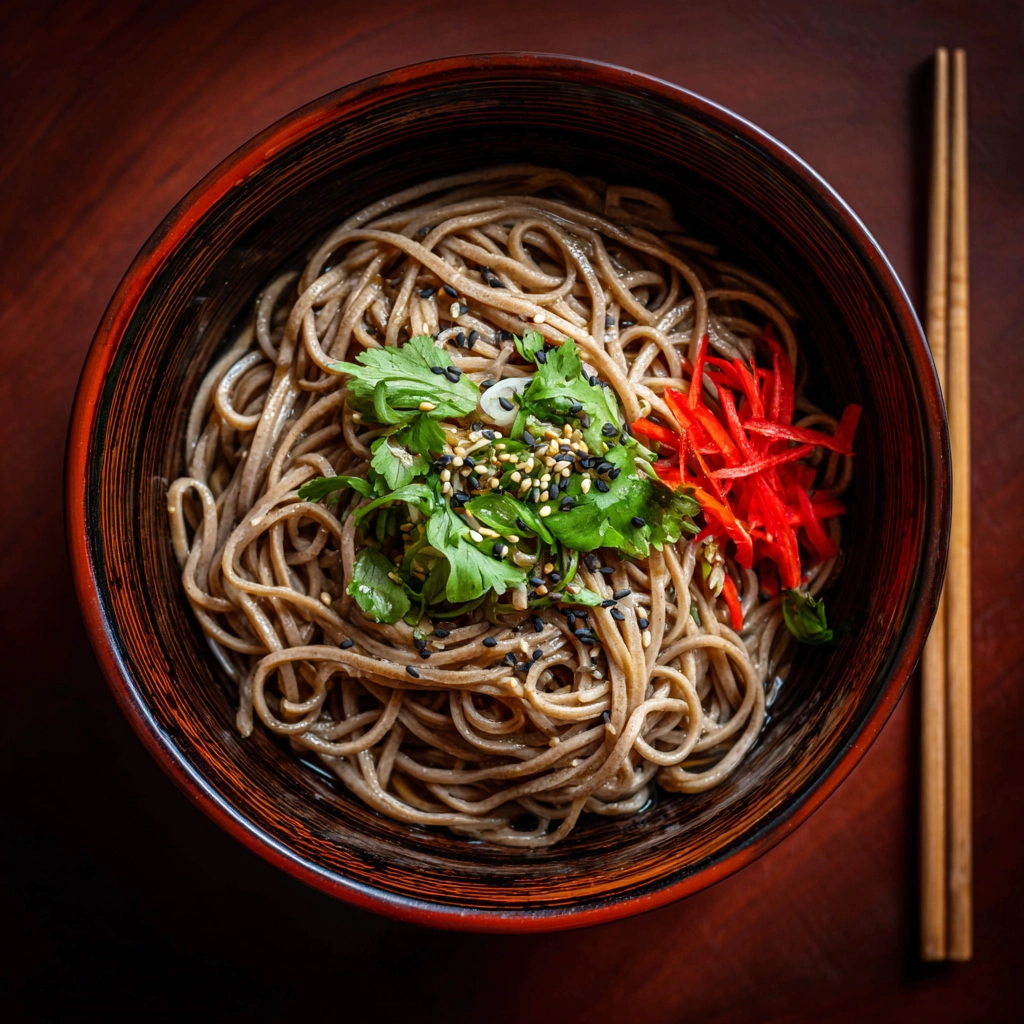
Ingredients Needed
| Ingredient | Quantity | Approx. Calories |
|---|---|---|
| Soba noodles (100% buckwheat) | 8 oz (225 g) | 300 |
| Soy sauce | 3 tbsp | 30 |
| Rice vinegar | 2 tbsp | 0 |
| Sesame oil | 1 tbsp | 120 |
| Honey or maple syrup | 1 tbsp | 60 |
| Garlic, minced | 2 cloves | 10 |
| Ginger, grated | 1 tsp | 2 |
| Green onions, sliced | ¼ cup | 10 |
| Sesame seeds | 1 tsp | 15 |
| Optional vegetables (carrots, cucumber, bell pepper) | 1–2 cups | 50–80 |
Step-by-Step Cooking Instructions
- Cook the soba noodles according to the package instructions. Typically, they boil for 4–5 minutes. Drain and rinse under cold water to stop cooking and remove excess starch.
- Prepare the sauce by whisking together soy sauce, rice vinegar, sesame oil, honey or maple syrup, garlic, and ginger in a small bowl.
- Prepare vegetables by slicing carrots, cucumber, bell pepper, or any preferred additions into thin, bite-sized strips.
- Combine noodles and sauce in a large bowl, tossing until noodles are evenly coated.
- Add vegetables and mix gently to combine for a colorful, flavorful dish.
- Garnish with green onions and sesame seeds before serving.
- Serve immediately, either chilled for a refreshing salad or slightly warmed for a comforting noodle bowl.
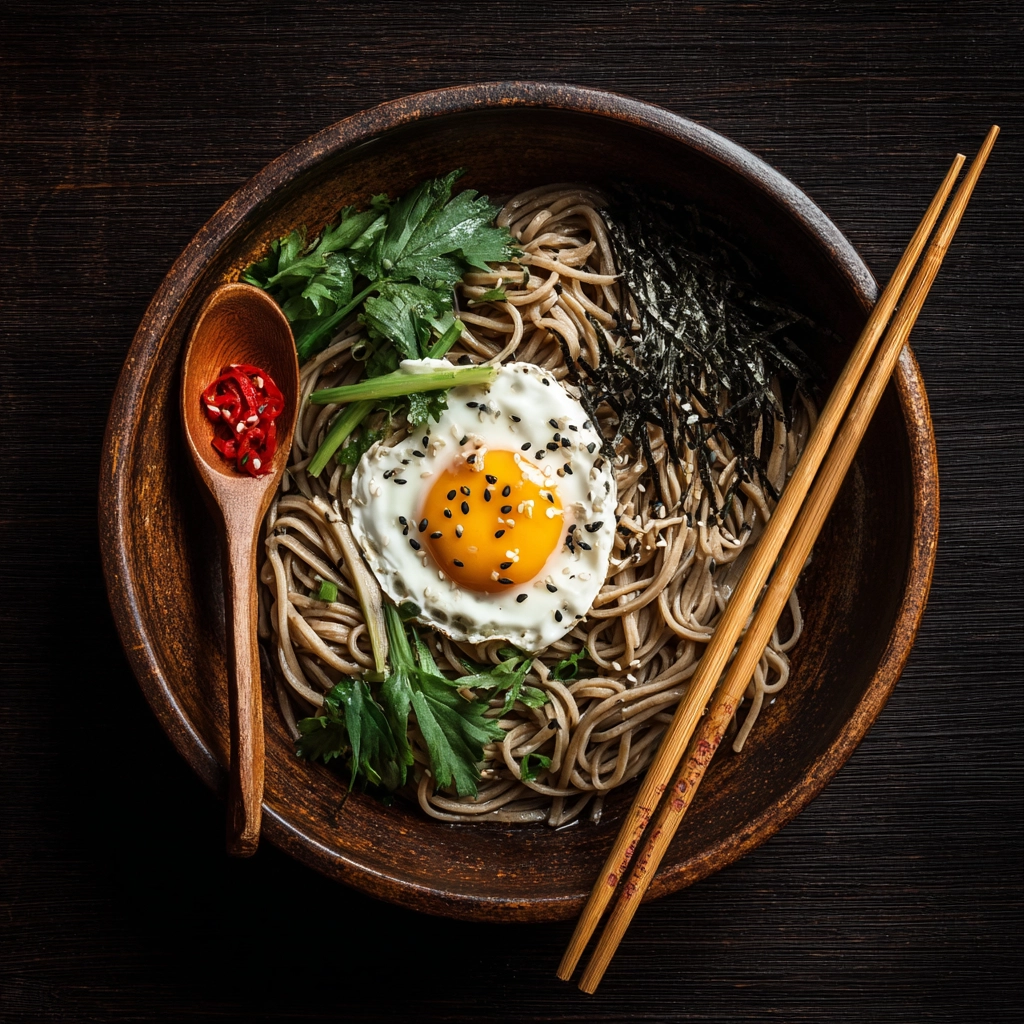
Tips for Customizing the Recipe
- Add tofu, chicken, or shrimp for extra protein.
- Swap vegetables seasonally; spinach, snow peas, or edamame work well.
- Use tamari instead of soy sauce for a gluten-free version.
- Add chili flakes, sriracha, or fresh chili for a spicy kick.
- Make it a soup by adding vegetable or miso broth instead of serving cold.
Nutritional Information (Per Serving, Approx.)
| Nutrient | Amount |
|---|---|
| Calories | 350–400 |
| Carbohydrates | 60–65 g |
| Protein | 10–12 g |
| Fat | 10–12 g |
| Fiber | 4–5 g |
Soba noodles provide a good source of plant-based protein, fiber, and essential minerals like manganese and magnesium.
Serving Suggestions
Soba noodles can be served hot or cold and pair well with:
- Asian-inspired salads with shredded vegetables and sesame dressing
- Stir-fried vegetables and proteins
- Miso soup or broth bowls
- Topped with avocado, boiled eggs, or crispy tofu for a complete meal
- Lightly drizzled with sesame or peanut sauce for extra flavor
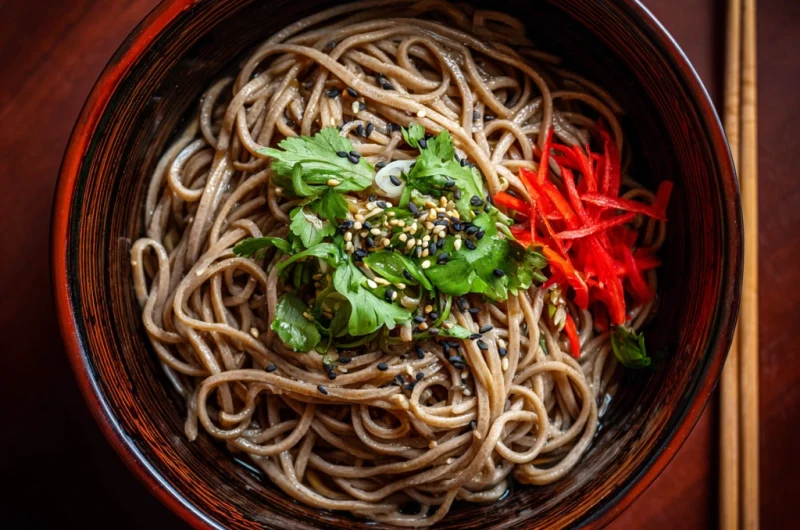
Soba Noodles
2-3
servings10
minutes5
minutes350–400
kcalIngredients
8 oz (225 g) soba noodles (100% buckwheat for gluten-free)
3 tbsp soy sauce (or tamari for gluten-free)
2 tbsp rice vinegar
1 tbsp sesame oil
1 tbsp honey or maple syrup
2 garlic cloves, minced
1 tsp grated ginger
¼ cup green onions, sliced
1 tsp sesame seeds
1–2 cups optional vegetables (carrots, cucumber, bell pepper, snap peas)
Directions
- Cook soba noodles according to package instructions (usually 4–5 minutes). Drain and rinse under cold water.
- In a small bowl, whisk together soy sauce, rice vinegar, sesame oil, honey/maple syrup, garlic, and ginger.
- Slice vegetables into thin strips.
- Toss cooked noodles with the sauce until evenly coated.
- Add vegetables and mix gently.
- Garnish with green onions and sesame seeds. Serve chilled or slightly warmed.
Recipe Video
Notes
- Use 100% buckwheat soba for a gluten-free option.
Rinse cooked noodles under cold water to prevent sticking.
FAQs
1. Are soba noodles gluten-free?
Not always. Only soba noodles made from 100% buckwheat flour are gluten-free. Many store-bought soba noodles contain wheat, so check the label if you need a gluten-free option.
2. How long do soba noodles take to cook?
Typically, soba noodles cook in 4–5 minutes in boiling water. Be careful not to overcook, as they can become mushy.
3. Can soba noodles be eaten cold?
Yes! Cold soba noodles are popular in Japan, often served as a refreshing salad or with dipping sauce. Chilling after cooking helps maintain their firm texture.
4. Can I add protein to soba noodles?
Absolutely. Tofu, chicken, shrimp, or boiled eggs work perfectly to turn soba noodles into a complete meal.
5. How should I store cooked soba noodles?
Store cooked soba noodles in an airtight container in the refrigerator for 2–3 days. Rinse with cold water before storing to prevent sticking.
Conclusion
Soba noodles are a delicious, healthy, and highly versatile dish suitable for any season. Their nutty flavor, quick preparation, and adaptability make them a go-to option for quick lunches, meal prep, or elegant dinners. By combining soba noodles with fresh vegetables, protein, and flavorful sauces, you can enjoy a satisfying meal that is as nutritious as it is delicious. Whether you’re a fan of traditional Japanese cuisine or modern fusion recipes, soba noodles are an effortless way to elevate your meals with minimal effort.