Creamy Homemade Almond Butter: A Nutty Delight You Can Make at Home
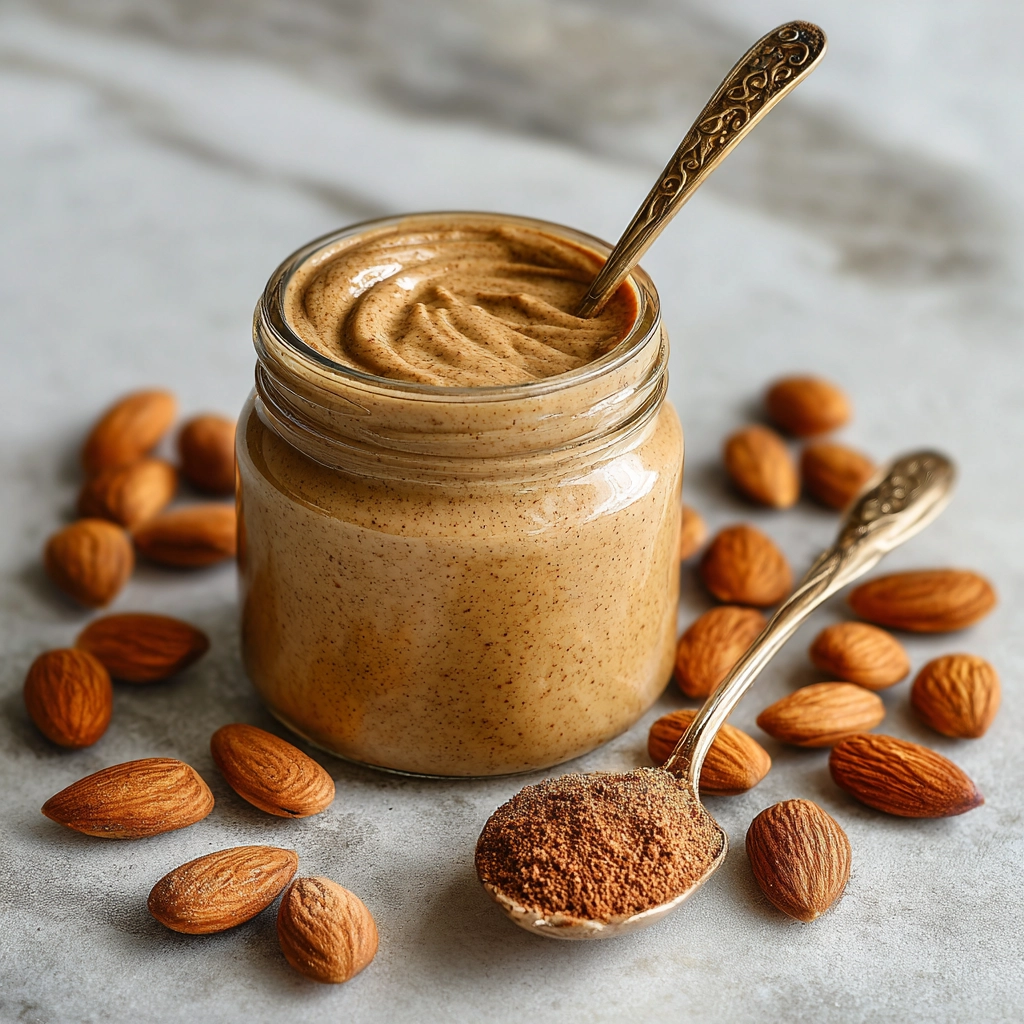
Imagine the rich aroma of roasted almonds filling your kitchen, followed by the smooth, creamy texture of almond butter spreading effortlessly on your toast. Homemade almond butter offers more than just incredible taste—it’s a nutrient-dense powerhouse that can transform breakfasts, snacks, and even desserts. Unlike store-bought varieties, making almond butter at home lets you control ingredients, sweetness, and texture.
You can craft it creamy, chunky, roasted, or lightly sweetened according to your preferences. Beyond its delicious flavor, almond butter is packed with healthy fats, protein, and essential vitamins, making it a perfect addition to a balanced diet. From smoothies to baking, snacks to sauces, creamy homemade almond butter brings a gourmet touch to everyday meals while keeping things natural and wholesome.
Ingredients Needed
Creating creamy almond butter at home requires minimal ingredients. Here’s a table with the approximate calorie count:
| Ingredient | Quantity | Calories (approx.) |
|---|---|---|
| Raw almonds | 2 cups (280 g) | 1,610 |
| Salt | 1/4 tsp | 0 |
| Honey or maple syrup | 1–2 tsp (optional) | 20–40 |
| Neutral oil (optional) | 1–2 tsp (optional) | 40–80 |
Step-by-Step Cooking Instructions
- Preheat Oven (Optional): Preheat your oven to 350°F (175°C) if you prefer roasted almond butter. Spread almonds on a baking sheet and roast for 10–12 minutes, stirring halfway through for even roasting.
- Cool Almonds: Allow the almonds to cool slightly before processing to prevent overheating your food processor.
- Process Almonds: Transfer almonds to a high-speed food processor. Pulse initially to break down the nuts into small pieces.
- Blend to Creamy Butter: Continue processing for 8–12 minutes, scraping down the sides as needed. The almonds will go from crumbly to a sticky paste and finally to smooth, creamy almond butter.
- Add Flavor (Optional): Mix in salt, honey, maple syrup, or a small amount of neutral oil to enhance creaminess and taste. Process briefly to combine.
- Store: Transfer almond butter to an airtight jar. It can be stored at room temperature for up to 2 weeks or refrigerated for up to 2 months.
Tips for Customizing the Recipe
- Chunky Almond Butter: Reserve 1/4 cup of almonds and pulse at the end to create a chunky texture.
- Sweet Variations: Add cinnamon, cocoa powder, or vanilla extract for a flavorful twist.
- Oil-Free: For a healthier version, skip the oil; long processing times will naturally release enough almond oils for creaminess.
- Roasted vs. Raw: Roasting enhances flavor and aroma, while raw almonds give a lighter, nuttier taste.
Nutritional Information (Per 2 Tbsp Serving)
| Nutrient | Amount/Details |
|---|---|
| Calories | 190–200 |
| Protein | 6–7 g |
| Fat | 16–18 g |
| Carbohydrates | 6 g |
| Fiber | 3 g |
| Sugar | 1–2 g (without sweetener) |
| Vitamin E | 20% DV |
| Magnesium | 10% DV |
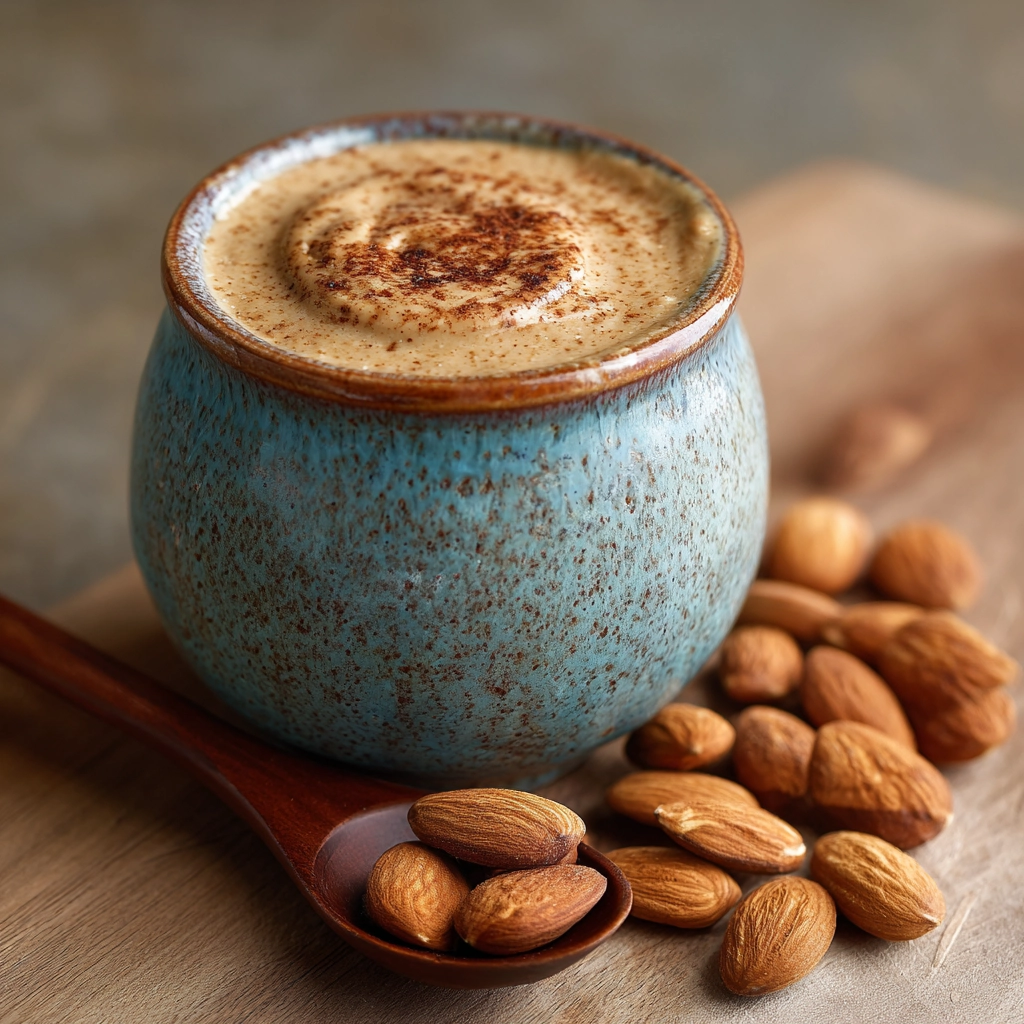
Almond butter is rich in heart-healthy fats, protein, and micronutrients, making it an excellent addition to a nutritious diet.
Serving Suggestions
- Breakfast: Spread on toast, bagels, or pancakes.
- Smoothies: Blend into morning smoothies for creaminess and protein.
- Snacks: Pair with apple slices, celery sticks, or rice cakes.
- Baking: Use in cookies, brownies, or energy bars for natural flavor.
- Sauces & Dressings: Stir into sauces for savory dishes or drizzles for desserts.
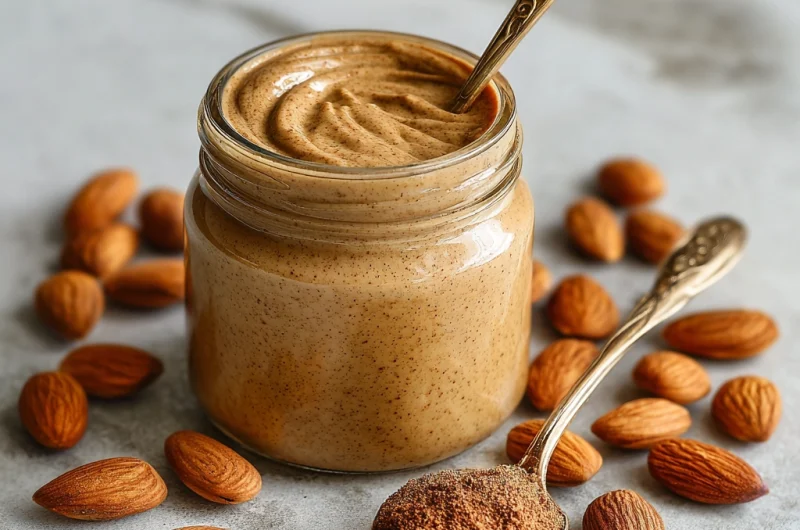
Creamy Homemade Almond Butter: A Nutty Delight You Can Make at Home
1
servings10
minutes10
minutes190-200
kcalIngredients
IngredienttQuantitytCalories (approx.)
Raw almondst2 cups (280 g)t1,610
Saltt1/4 tspt0
Honey or maple syrupt1–2 tsp (optional)t20–40
Neutral oil (optional)t1–2 tsp (optional)t40–80
Directions
- Roast Almonds (Optional): Preheat oven to 350°F (175°C). Spread almonds on a baking sheet and roast for 10–12 minutes, stirring halfway through. Let cool slightly.
- Process Almonds: Transfer almonds to a high-speed food processor. Pulse to break them down into small pieces.
- Blend to Butter: Continue processing for 8–12 minutes. Scrape the sides occasionally. Almonds will transform from crumbly → sticky → smooth and creamy.
- Add Flavor (Optional): Mix in salt, honey, maple syrup, or oil for taste and creaminess. Process briefly to combine.
- Store: Transfer to an airtight jar. Store at room temperature for up to 2 weeks or refrigerated for up to 2 months. Stir before use if oils separate.
Recipe Video
Notes
- For the creamiest almond butter, use a high-speed food processor and be patient—almonds take time to release their natural oils. Roasting the almonds enhances flavor but is optional. Adjust sweetness and salt to taste, and store in an airtight jar.
FAQs
1. What is homemade almond butter?
Homemade almond butter is a smooth, creamy spread made by grinding almonds into a paste. Unlike store-bought versions, it allows full control over ingredients, flavor, and sweetness.
2. Do I need to roast almonds for almond butter?
No, roasting is optional. Roasting enhances flavor and aroma, while raw almonds give a lighter, nuttier taste. Both versions can be processed into creamy butter.
3. How long does homemade almond butter last?
Stored in an airtight jar, almond butter lasts about 2 weeks at room temperature and up to 2 months in the refrigerator. Stir before use if natural oils separate.
4. Can I make almond butter without oil?
Yes! Almonds naturally release oil when processed. Using high-speed processing will create creamy butter without adding extra oil. Adding oil is optional for extra smoothness.
5. Can I make it crunchy instead of creamy?
Absolutely! Reserve 1/4 cup of chopped almonds and fold them in at the end to make chunky almond butter.
Conclusion
Creamy homemade almond butter is more than just a nut spread—it’s a versatile, nutritious, and indulgent ingredient that elevates meals and snacks alike. With just a few simple ingredients and a bit of patience, you can create a buttery, smooth almond spread tailored to your taste. Whether enjoyed on toast, blended in smoothies, or used in baking, homemade almond butter brings both flavor and nourishment to your kitchen. Making it yourself ensures freshness, control over ingredients, and the satisfaction of crafting something truly wholesome from scratch.