Cauliflower Mac and Cheese: A Creamy, Comforting Twist on a Classic Favorite
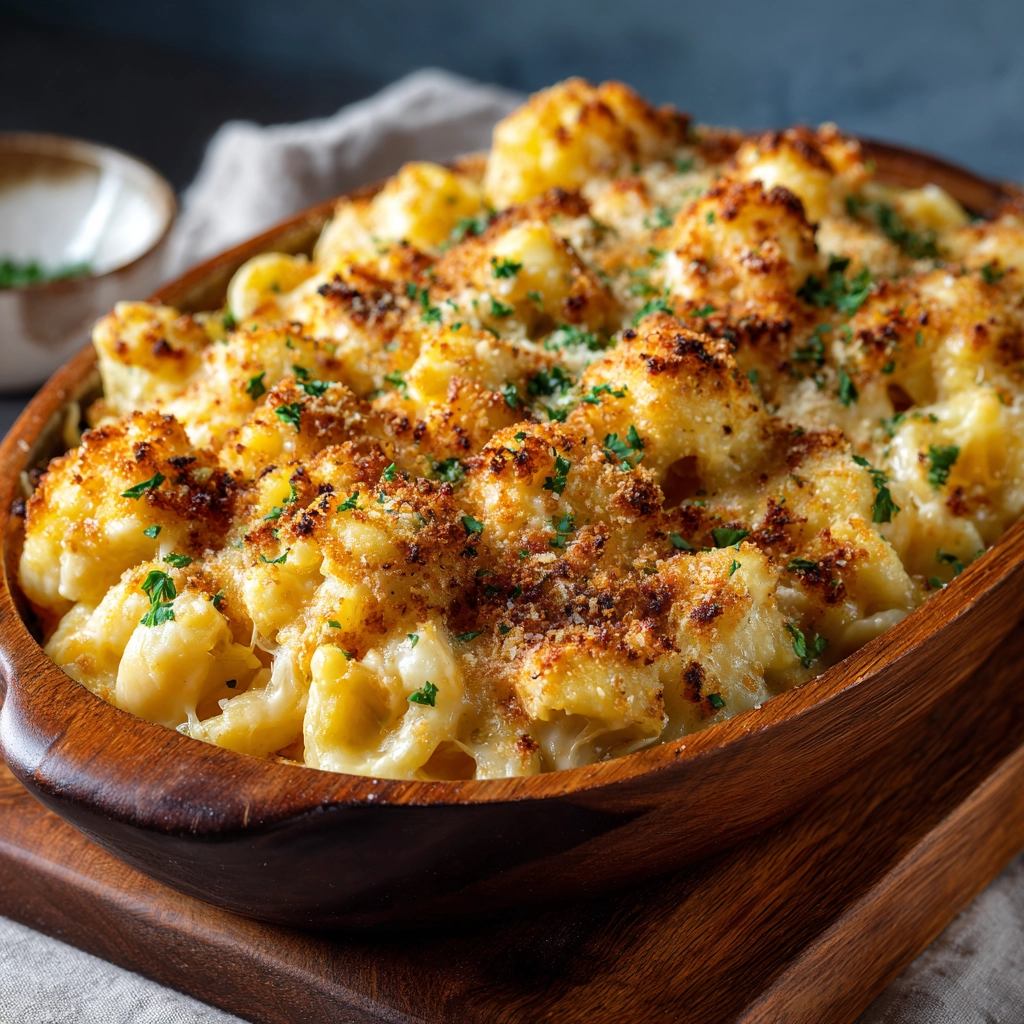
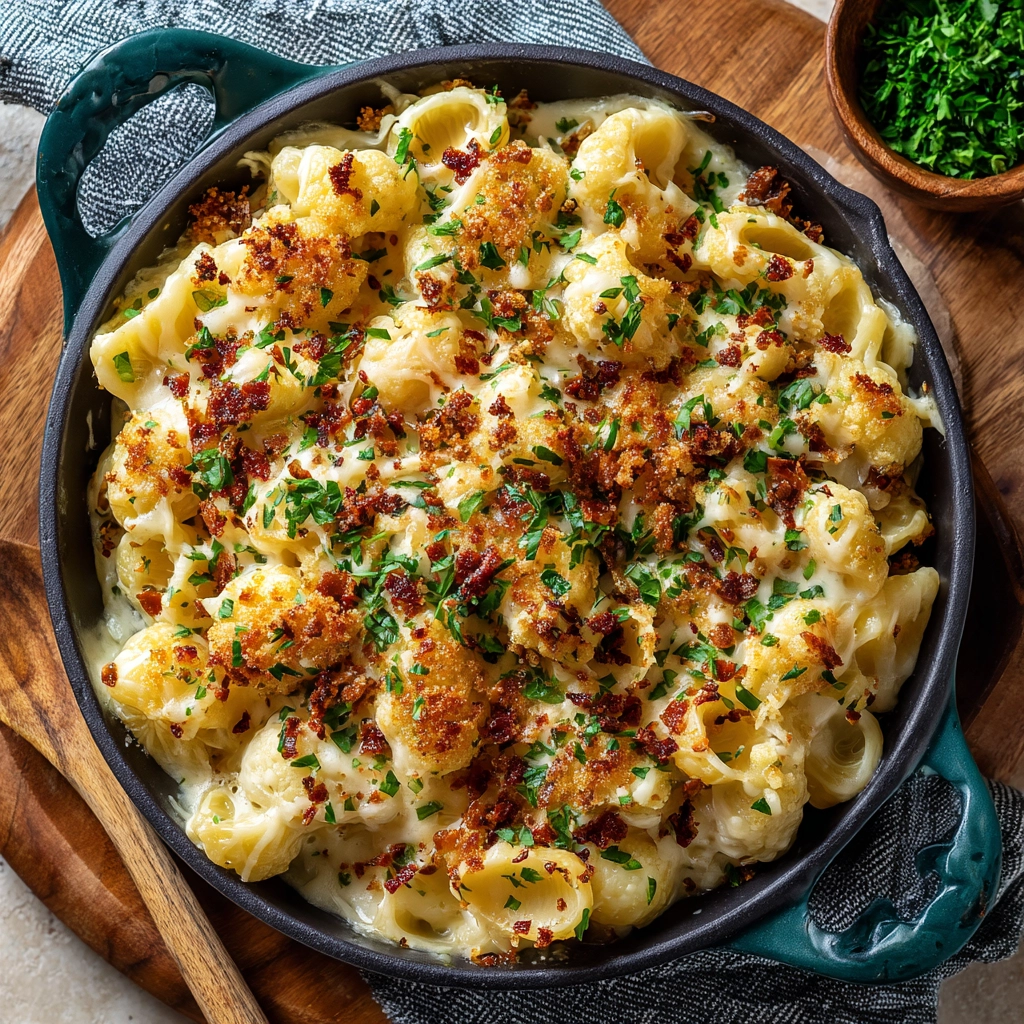
Comfort food often carries memories of cozy evenings, family dinners, and indulgent bites that melt stress away. Classic mac and cheese has long held a cherished place at the table, but modern home cooks are increasingly searching for lighter, veggie-packed alternatives that don’t sacrifice flavor. Enter cauliflower mac and cheese—a deliciously creamy, satisfying dish that blends wholesome ingredients with rich, cheesy goodness.
Cauliflower has become a superstar in the culinary world, and for good reason. Its mild flavor and versatile texture allow it to transform into everything from rice substitutes to pizza crusts. When paired with a velvety cheese sauce, cauliflower takes on a comforting role that rivals traditional pasta-based versions. The result? A hearty, lower-carb, nutrient-rich dish that feels indulgent while supporting balanced eating habits.
Ingredients Needed
Below is a comprehensive list of ingredients required to prepare cauliflower mac and cheese, along with approximate calorie counts per serving portion of each ingredient.
| Ingredient | Quantity | Approximate Calories |
|---|---|---|
| Cauliflower florets | 1 large head (about 6 cups) | 150 kcal |
| Cheddar cheese (shredded) | 2 cups | 800 kcal |
| Cream cheese | 4 oz | 400 kcal |
| Whole milk | 1 cup | 150 kcal |
| Butter | 2 tbsp | 200 kcal |
| Garlic (minced) | 2 cloves | 10 kcal |
| Salt | 1 tsp | 0 kcal |
| Black pepper | ½ tsp | 3 kcal |
| Paprika (optional) | ½ tsp | 3 kcal |
| Mustard powder (optional) | ½ tsp | 3 kcal |
| Breadcrumbs (optional topping) | ½ cup | 200 kcal |
Step-by-Step Cooking Instructions
1. Prepare the Cauliflower
Begin by washing and cutting the cauliflower into evenly sized florets. Uniform pieces ensure consistent cooking and a tender texture.
2. Cook the Cauliflower
Bring a large pot of salted water to a boil. Add the cauliflower florets and cook for 6–8 minutes, or until fork-tender. Drain thoroughly and set aside. For extra creaminess, lightly mash a small portion of the cauliflower while leaving the rest whole.
3. Make the Cheese Sauce
In a medium saucepan, melt butter over medium heat. Add minced garlic and sauté for about 30 seconds until fragrant.
Pour in the milk and stir gently. Add cream cheese and whisk until smooth and fully melted. Gradually stir in shredded cheddar cheese, allowing it to melt completely into a thick, creamy sauce.
Season with salt, pepper, paprika, and mustard powder for enhanced flavor.
4. Combine and Assemble
Preheat your oven to 375°F (190°C).
Place the cooked cauliflower in a greased baking dish. Pour the cheese sauce evenly over the florets and gently toss to coat.
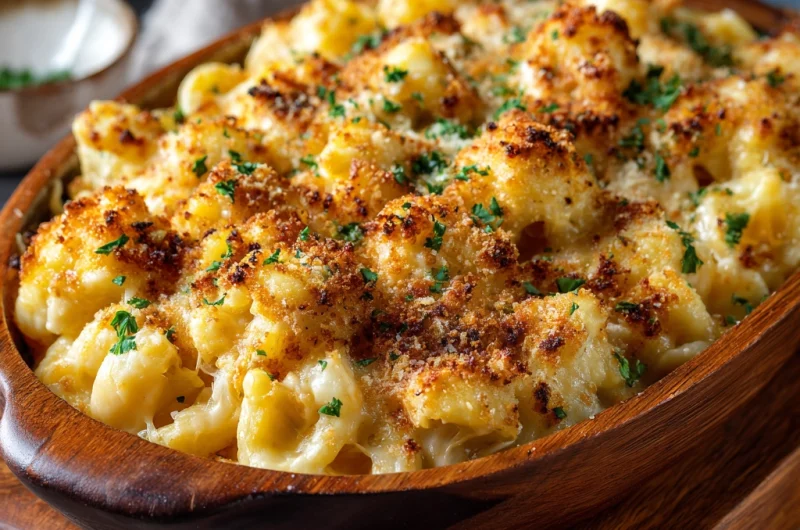
If using breadcrumbs, sprinkle them over the top for a crispy finish.
5. Bake
Bake for 20–25 minutes, or until bubbly and golden on top. For extra browning, broil for 2–3 minutes at the end.
6. Serve
Allow the dish to rest for 5 minutes before serving. This helps the sauce thicken and settle beautifully.
Tips for Customizing the Recipe
Cauliflower mac and cheese adapts easily to different dietary needs and flavor preferences. Consider these creative variations:
Add Protein
- Grilled chicken
- Crispy bacon bits
- Ground turkey
- Shrimp
Make It Spicy
- Add diced jalapeños
- Sprinkle red pepper flakes
- Mix in hot sauce
Experiment with Cheese
- Gouda for smokiness
- Mozzarella for stretchiness
- Parmesan for sharp depth
- Pepper jack for heat
Low-Carb & Keto Option
Skip breadcrumbs and use heavy cream instead of milk for an even richer, keto-friendly version.
Dairy-Free Version
Use plant-based butter, unsweetened almond milk, and dairy-free cheese alternatives.
Nutritional Information
Cauliflower mac and cheese offers several nutritional benefits compared to traditional pasta versions:
- Lower in carbohydrates – Cauliflower contains significantly fewer carbs than pasta.
- Rich in fiber – Supports digestive health and promotes fullness.
- High in vitamin C – Boosts immune function.
- Contains calcium and protein – From cheese and dairy components.
Estimated nutritional breakdown per serving (based on 6 servings):
| Nutrient | Amount per Serving |
|---|---|
| Calories | 350–400 kcal |
| Protein | 15–18 g |
| Carbohydrates | 12–18 g |
| Fat | 28–32 g |
| Fiber | 3–4 g |
Exact values depend on ingredient choices and portion size.
Serving Suggestions
Cauliflower mac and cheese pairs beautifully with a wide range of dishes. Try serving it alongside:
- Grilled steak or roasted chicken
- BBQ ribs
- Fresh green salad with vinaigrette
- Garlic roasted vegetables
- Baked salmon
For a complete vegetarian meal, pair it with sautéed spinach, mushrooms, or a hearty lentil loaf.
This dish also works wonderfully as a holiday side, potluck contribution, or meal-prep option for busy weekdays.
Cauliflower Mac and Cheese: A Creamy, Comforting Twist on a Classic Favorite
6
servings15
minutes30
minutes350–400
kcalIngredients
1 large head cauliflower (about 6 cups florets)
2 cups shredded cheddar cheese
4 oz cream cheese
1 cup whole milk
2 tablespoons butter
2 cloves garlic, minced
1 teaspoon salt
½ teaspoon black pepper
½ teaspoon paprika (optional)
½ teaspoon mustard powder (optional)
½ cup breadcrumbs (optional topping)
Directions
- Prepare the Cauliflower:
- Wash and cut cauliflower into evenly sized florets.
- Boil the Cauliflower:
- Bring salted water to a boil. Cook cauliflower for 6–8 minutes until fork-tender. Drain thoroughly and set aside.
- Make the Cheese Sauce:
- In a saucepan over medium heat, melt butter. Add minced garlic and sauté for 30 seconds.
- Pour in milk and add cream cheese. Whisk until smooth.
- Stir in shredded cheddar gradually until melted and creamy.
- Season with salt, pepper, paprika, and mustard powder.
- Assemble:
- Preheat oven to 375°F (190°C).
- Place drained cauliflower in a greased baking dish. Pour cheese sauce over and gently mix.
- Sprinkle breadcrumbs on top if using.
- Bake:
- Bake for 20–25 minutes until bubbly and golden. Broil for 2–3 minutes for extra browning if desired.
- Serve:
- Let rest for 5 minutes before serving.
Recipe Video
Notes
- Drain the cauliflower thoroughly: Excess moisture can make the sauce watery. After boiling, let the florets sit in a colander for a few minutes and gently pat dry if needed.
Avoid overcooking: Cook cauliflower just until fork-tender. Overcooking can cause it to become mushy and break apart when mixed with the cheese sauce.
FAQs
1. Does cauliflower mac and cheese taste like regular mac and cheese?
Cauliflower mac and cheese delivers a creamy, cheesy flavor very similar to the traditional pasta version. While the texture is slightly different—more tender and less chewy—the rich cheese sauce makes it just as comforting and satisfying.
2. Is cauliflower mac and cheese healthier than traditional mac and cheese?
Yes, in many cases it is. Cauliflower contains fewer carbohydrates and calories than pasta while providing more fiber and essential vitamins like vitamin C. The overall health factor depends on the amount of cheese and dairy used, but it generally offers a lighter alternative.
3. Can I make cauliflower mac and cheese ahead of time?
Absolutely. Prepare the dish up to the baking step, cover it tightly, and refrigerate for up to 24 hours. When ready to serve, bake as directed, adding an extra 5–10 minutes if needed.
4. How do I prevent the dish from becoming watery?
Excess moisture usually comes from under-drained cauliflower. After boiling, allow the florets to drain thoroughly. You can even pat them dry with a clean kitchen towel to remove extra water before adding the cheese sauce.
5. Can I freeze cauliflower mac and cheese?
Yes, though the texture may slightly change after reheating. Store it in an airtight container for up to 2 months. Thaw overnight in the refrigerator and reheat in the oven for best results.
6. Is cauliflower mac and cheese keto-friendly?
It can be. Simply skip breadcrumbs and use heavy cream instead of milk. With low-carb ingredients, the dish fits well into most ketogenic meal plans.
Conclusion
Cauliflower mac and cheese reimagines a beloved classic with a nutritious, vegetable-forward twist. Creamy, cheesy, and deeply satisfying, it proves that comfort food can align with healthier eating goals without sacrificing flavor. Easy preparation, customizable ingredients, and crowd-pleasing taste make it a must-try recipe for anyone seeking balance between indulgence and nourishment.